By Southwest Art: November 15, 2017
For more work by Logan Maxwell Hagege, click here.

For more work by Logan Maxwell Hagege, click here.
By Gussie Fauntleroy
This story was featured in the July 2017 issue of Southwest Art magazine.
The first time Tim Solliday walked into the Los Angeles home and studio of the artist who would become his most important teacher, it felt like stepping into a movie from the 1920s. The ramshackle Spanish-style house was filled with antique furniture and décor: Oriental carpets covered the floors, while paintings, sculptures, stacks of prints, and other art objects were scattered about.
Looking back, Solliday finds it appropriate that Theodore Lukits (1897-1992) seemed to belong to an earlier era. Through the Lukits Academy of Fine Arts, the Romanian-American painter was offering something that—in the mid-1970s, when Solliday studied with him—had long gone out of style in American art education: academic instruction in the atelier manner, taking students slowly through the foundations of drawing and painting, beginning with only black and white.
At a time when representational painting was overshadowed by abstract and conceptual art, Lukits and his school filled a void. “Almost nobody knew who John Singer Sargent was when I was a kid,” Solliday laments. The atelier approach was a perfect fit for someone who left a Long Beach-area college because the art instructors had nothing but ridicule for Norman Rockwell and the other illustrators he admired; someone who since childhood had been mesmerized by great painting but was told it would not be possible to make a living that way. “I thought traditional art was dead on the vine, but I still believed I would do it,” Solliday says. “I always thought there was room for everything in art.”
In fact, he was right. Not only did collectors open their arms again to landscape, still-life, and figurative art, but Solliday—who paid for his art instruction by working as an apprentice billboard painter in Southern California—was right about his own ability to forge a successful career in representational fine art. His widely collected work is now in the permanent collections of the Briscoe Western Art Museum and the National Museum of Wildlife Art and has been exhibited at the National Cowboy & Western Heritage Museum, the Autry Museum, and the Carnegie Museum of Art, as well as other museums and galleries.
Solliday’s early conception of his artistic future leaned toward the illustration field. His father was a technical illustrator for Douglas Aircraft Company, a job that took the family from Solliday’s birth state of Iowa to the Palos Verdes Peninsula in Southern California, where as a young teen he had a horse. Although he had no interest in technical illustration, he was inspired by his father’s artistic ability and obsessed with drawing. Meanwhile, western movies of the 1950s and early ’60s left a lasting impression, offering a glimpse of how effectively visual qualities could stir the emotions and convey particular moods.
When Solliday’s college foray into art turned into disappointment, billboards became his training ground. In those days the work was often done in hangar-sized studios where mechanical scaffolding positioned a painter where he needed to be on the 14-by-48-foot image. Solliday learned to handle paint. He adopted disciplined work habits. He became adept at depicting texture—everything from a beer can to a horse to a girl on the beach. And it was through his fellow billboard painters that he learned of Lukits. In the 1940s and ’50s the billboard company routinely sent painters to Lukits to refine their skills. That was no longer happening by Solliday’s time, but individual billboard painters would go to Lukits on their own after work, often inviting fellow painters in whom they noticed an unusually high level of interest and talent.
So it was that Solliday found himself at Lukits’ home and studio, feeling as if he had stumbled onto a Hollywood movie set. That first night he was the last of the students to leave. Finally glimpsing the possibility of art instruction that matched his goals, he felt a kindred spirit in the older artist, then in his 80s, and the two talked until well after midnight. “I thought, okay, he’s a source of knowledge for me,” Solliday recalls. For five years he went to Lukits’ studio two or three nights a week after work. The intensive instruction began with learning to draw not from live models but from plaster casts or marble sculptures of the human form. From this came an essential understanding of using values of light and dark to produce a sense of three-dimensional form. For Solliday it was a revolutionary way of seeing and of rendering what he saw. “I thought, wow, what a difference from trying to draw from out of your head.”
Eventually, color came into the mix. Lukits would set up still-life arrangements for the students, presenting increasingly complex color problems to work out in paint. He used special lighting to simulate various conditions of outdoor light: intense yellow overhead for midday, blue for moonlight, a slanted angle of warm light for sunset, or a veil to mimic fog. “He was very honest,” Solliday says of his teacher. “He told us we’d never learn true color until we got outdoors, but he also knew it’s very difficult to paint outdoors, so we had a head start.” Soon the young artist could look again at the work of artists he admired and see what made them great. “It was thrilling,” he says.
Among the earlier painters who made a lasting impression on Solliday were illustrator Dean Cornwell (1892-1960) and Cornwell’s mentor, Anglo-Welsh artist Sir Frank Brangwyn (1867-1956). By studying Brangwyn’s paintings and drawings, Solliday began to understand that an arresting composition starts with massive shapes and the juxtaposition of forms. Brangwyn, and Monet before him, also opened Solliday’s eyes to the use of broken color, which lets the viewer’s eye mix colors that are adjacent on the canvas, having been applied as separate brush strokes. “It’s all about colors bouncing off other colors, or the illusion of brightness by adding gray around the strong colors,” Solliday says. “I’m known as a colorist, but if you study my work in person, you’ll see a great deal of gray.”
Solliday especially admires the use of gray to influence color in the work of western painter Frank Tenney Johnson (1874-1939). As it turns out, Solliday worked for a time in the Alhambra, CA, studio that once was Johnson’s. He’s also had use of the former studio of William Merritt Chase (1849-1916). These days the 65-year-old artist stands at his easel in the light-filled space on the top floor of the historic First Baptist Church—one of Pasadena’s largest, built in 1926. With arched stained-glass windows and a high ceiling, the studio has a touch of the medieval but with fresh white walls and state-of-the-art lighting that Solliday installed when he leased the space two years ago. It’s worth all the steps he climbs each day to reach it, he says.
For many years Solliday was known as a landscape painter, capturing California’s natural beauty, especially through his plein-air work. He continues to use the landscape as the setting for his imagery, but now his focus is on the Native Americans, mountain men, and others who carried out their lives on the land. It’s a full-circle swing back to his boyhood fascination with the Old West—minus the confrontation—with special inspiration from the work of the Taos Society of Artists. When Native people and European-Americans interact in Solliday’s paintings, as they do in FRONTIER COMMERCE, it is in quiet encounters reflecting a feeling of mutual respect. The painting, as with much of his work, gave the artist an opportunity to combine intricate details, like beadwork on clothing, within the almost stage-set context of beautifully balanced color and solid, muscular shapes.
Similarly, COURTSHIP places a young Indian couple in a forest of dappled sun and shade as a horse grazes close by. “It’s about love blooming out of the peacefulness,” Solliday says. Both paintings are part of this year’s Prix de West Invitational show at the National Cowboy & Western Heritage Museum in Oklahoma City, on view through August 6. The two paintings reflect the artist’s shift not only in subject matter but also painting style. In both areas, Solliday has moved to a less literal, more imaginative approach. “It’s all based on classical principles of composition, light, and drawing,” he says, “but I had to come to a place that’s a little more free.”
What this means when he starts a new painting is sitting down with paper and scribbling abstract lines and shapes until they begin to suggest compelling forms, and a painting idea emerges from there. Then he turns to his trove of plein-air sketches, his collection of books and artifacts, and a well of artistic knowledge to flesh it out. More important than a literal interpretation is a feeling and mood that “moves the soul,” he believes. Like the best filmmakers who use camera angles, filters, and composition to produce a visually memorable scene, Solliday understands the powerful visceral impact of thoughtfully rendered color and form. “Every time I saw a poetic scene in a movie, especially westerns, it went into my mind,” he says. “And now it’s coming out.”

The paintings of Joseph Todorovitch are wrought with the beauty of the human figure, striking compositions and a strong understanding of techniques and tools. They are pieces that reach beyond narrative to the artist’s fascination with creating. Todorovitch finds the act of painting to be ceremonial or ritualistic, with this being reflected in some of his artwork such as Rain Maker and Guardian where the women are adorned with crowns of eucalyptus leaves.
“The ceremonial works have a sense of ‘ritual’ that is somewhat absent in my life other than during the process of their creation. They manifest from my feelings about the ‘act of creating things’ that are important to me,” Todorovitch explains. “Creating is spiritual for me (not religious), which is somewhat counter to my everyday life which is rather domestic. I like that these works fulfill that need and express that sentiment about me.”
Other pieces are derived from Todorovitch’s desire to explore design elements. He elaborates that this allows him “to share the domestic pragmatic aspect of my everyday life as well as simply to explore design elements and pictorial issues that are compelling to me. Picture making has become my life and the time spent exploring design has become the spiritual ritual that fills that need.”
Works such as the still life-styled Entropy and the figurative Pollination are examples. The pieces came about when Todorovitch began experimenting with the textural qualities of a group of bees. “Bees are just amazing and there are all these implications that come along with them,” explains the California-based artist.” They were naturally a great design element to use in painting.”
Entropy is a work filled with energy and activity, and came from a moment of chaos in the artist’s life and allowed the painting to take its course. Pollination, he explains, is “such a critical idea of survival and that obviously opens the door for an individual interpretation of the painting.
Other works, such as Greatest Show on Earth, and Ride are explorations with multi-figures, where he is attempting to make the work more complex but yet have a sense of calm and order. The former painting was done from multiple references materials, while Ride is related to another work the artist did of a bicycle he saw in Rome.
“I like exploring different things to see what impacts me the most,” says Todorovitch. “I definitely go back to certain things, but I’m trying to shake up the normal routine with different ideas.”
These and other new works will be displayed in Todorovitch’s second solo exhibition at Maxwell Alexander Gallery in Los Angeles from October 14 to 28.
For more work by Joseph Todorovitch, click here.

By: Southwest Art | August 15, 2017
This story was featured in the September 2017 issue of Southwest Art magazine. Get the Southwest Art September 2017 print issue or digital download now–then subscribe to Southwest Art and never miss another story.
Maxwell Alexander Gallery’s annual destination-themed group shows have presented fresh, artistic takes on the majestic Grand Canyon, Vermilion Cliffs, and Monument Valley. This month the show returns with a spotlight on the more intimate but equally cherished setting of Taos, NM, through the eyes of 10 western painters, including G. Russell Case, David Grossmann, Logan Maxwell Hagege, and Tim Solliday. “We’ve invited some of the most well-known contemporary artists who paint this location,” says gallery director Beau Alexander, “but we’ve also included a few artists who traveled to the area for the first time.”
The show opens with an artists’ reception on Saturday, September 23, at 6:30 p.m., when the gallery unveils one or two new paintings by each participating artist. Visitors can expect to see wide-ranging interpretations of the northern New Mexico town and neighboring Sangre de Cristo Mountains. “It’s fun to get a new perspective on such an iconic location,” says Alexander. “Taos will forever hold an importance in the western art market. The Taos Society of Artists were among the most important figures in the western art movement, and many of the artists we represent are influenced by their works.”
That’s particularly true for Utah artist Brett Allen Johnson, who has long been inspired by the Taos Society artists. The landscape painter visited the town for the first time in May with plans to portray the landscape or perhaps the historic church at Ranchos de Taos. “Taos is very beautiful,” says Johnson, “but I left with the impression that the most special thing about it wasn’t the hills and the sage. Native life here was, and is, so thoroughly woven into the land itself, both in utility and spiritually. I knew that the land alone was a very incomplete picture.”
Thus inspired, the artist set out to complete his first finished figurative painting, EARTH AND CLAY, in which he portrays two Indians standing before an adobe structure and mud oven in the centuries-old community of Taos Pueblo. “I hope viewers might feel the connection to the earth, to the soil,” says Johnson of the scene, “but I also hope they will see two individuals with lives and emotions that are more complicated than the stereotypes.”
New Mexico native John Moyers brings two paintings that portray Native Americans against distinctive Taos backdrops. In MEN OF IMPORTANCE, the silhouette of Taos Mountain rises up behind a group of sharply dressed Taos Indians on horseback. “Everything in the painting is authentic, down to their hairstyles, the white blankets, and the leggings they wore in the late 1800s,” says Moyers. “I try to pay really close attention to that.”
The Santa Fe artist has frequented Taos since he was a boy, and he regularly revisits the town’s people and history in his work. “When I was a kid, you still saw the men in the white blankets and the horses around the plaza,” says Moyers. “I consider myself lucky to have seen it. You can’t stop progress, but it’s still a neat place.” —Kim Agricola
contact information
310.839.9242
www.maxwellalexandergallery.com
The small town of Taos, New Mexico, has provided inspiration for Western artists since Joseph Henry Sharp first visited there in 1893. The art haven is the subject of a new group show at Maxwell Alexander Gallery, which opens with a reception from 6:30 to 7:30 p.m. on September 23 and remains on view through October 7, and features the artwork of Danny Galieote, Kim Wiggins, David Grossmann, John Moyers, Tim Solliday and Logan Maxwell Hagege.
“The mix of cultures in Taos, its history and its beautiful surroundings make it a fascinating place to paint,” Grossmann says. His painting Clouded Sunset, Taos, captures an adobe structure called La Morada on the outskirts of Taos, which was part of a Catholic monastery dating back to the late 1700s. “The evening that I did this painting, the silence of La Morada seemed to carry a hidden history, a feeling echoed by the clouds that veiled the glowing sunset. I wanted to capture the sense of deep solitude and the way that the adobe walls seemed so connected to the land.”
In Galieote’s The Watchers, three protectors watch over their Pueblo family. “I wanted the figures to conjure a feeling of order and stability and that nothing could get past their glistening inscrutable eyes,” Galieote explains. “The middle figure seemed to naturally take his place as the wisest and the one who will have the final word to carry forth in war or in peace.”
Taos is an alluring subject for Wiggins. The landscape and the history imbue a sense of importance in his work. “My work, One Night at Taos Pueblo, centers on the iconic San Geronimo de Taos Mission located at the Taos Pueblo,” he explains. “In the painting two beautiful Pueblo children stand outside the mission under the light of a full moon. This painting is both symbolic and ethereal in nature hopefully capturing the very heart and resilience of the Taos people.”
View the show preview HERE
In the early 20th century Florenz Ziegfeld, creator of the Ziegfeld Follies musical revues on Broadway, was widely known for his muses, elaborately costumed chorus girls often called Ziegfeld Girls. The girls were the primary residents in Ziegfeld’s fantastical worlds of music and drama. “[H]e simply couldn’t stop being more and more lavish with every show,” wrote his wife after his death in 1932. “...the world remembers Mr. Ziegfeld as the man who revealed a whole new world of color and light and gaiety in the modern musical revue.”
Using the iconic Ziegfeld Girls and the era that they thrived in as inspiration, painter Jeremy Mann will be presenting a new collection of work at an exhibition July 15 at Maxwell Alexander Gallery in Los Angeles. The show will open the gallery’s brand-new space, which will be decorated with the installations the artist used for his photo shoots. For the opening guests are encouraged to come dressed in their finest and interact with the installations. The exhibition is a collaboration with Christina Molcillo of Black Lotus Clothing, who used Ziegfeld Girls as models for her designs, including dresses, gowns, headpieces and other antique materials.
“Many good things come out of collaborations in unexpected ways,” Mann says of working with Molcillo. “Wanting to not only keep my hands from detaining the unexpected, but also with respect to another artist’s unhindered personal visions, Christina developed and created the wardrobe and sets with unobstructed direction, based on a few meetings and her own research into my stylistic tendencies combined with her own artistic style.”
Their collaboration can be seen in works such as Luna and Moonlight, both featuring a female figure elegantly dressed in front of a prop crescent moon. Like Ziegfeld’s girls, and the photos of them that have survived, these figures have an element of theater to their presence amid carefully placed light, oversized stage elements and beautifully designed costuming. They are at once sumptuous and also vulnerable within Mann’s cool shadows and delicate brushstrokes.
“Having a theme to hold everything loosely together and give direction, we both have affections for the 1920s and the Ziegfeld Girl style, crossed with some [Alphonse] Mucha and modernity, as well as theater and darkness,” says Mann. “The moon stage grew from that era’s fascination with it as often seen as a moon with a painted face upon the stage. The timeless feeling is always something I prefer in my paintings, creating a haze of memory and capturing fleeting moments in perpetual paintings which draw up those same emotions, something dreamlike and lost, or a thing once wonderful and now forgotten.”
These “dreamlike” qualities overlap with much of Mann’s current state as an artist, in which he says he’s diving further into the cerebral ether of creation. “I suppose these would be my foggy years. I’ve been exploring deeper into the feelings evoked from atmosphere and light, how their effects work both with and against form, while eliciting emotions of fading memories, things past and times ceaseless endurance,” he says. “Logically this exploration evolved from my endeavors with film and Polaroid photography from the homemade cameras, and now into video and films using homemade lenses to capture that same effect, without the need for digital manipulations—I’ve a badinkling about most things digital. Film and video have a direct connection with ‘time’ and that is something which I desire to have a stronger place in my paintings. What an artist does with their time when not painting affects the painting even more than when they are.”
Mann’s show, which will also feature his bold cityscapes, will continue through August 12 in Los Angeles
To view more of Mann's work, click here.
Courtesy of American Art Collector magazine

Oklahoma City, Oklahoma June 2017
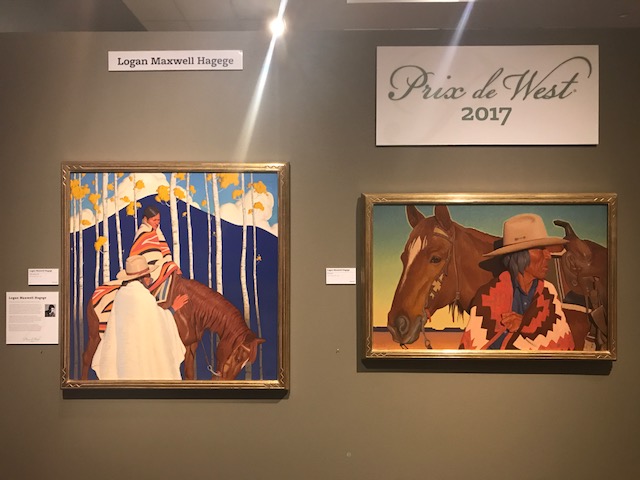
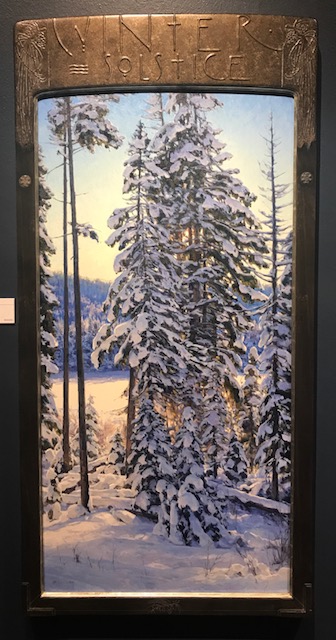
The 2017 Prix de West Invitational Art Exhibition and Sale finished up this year’s successful award’s ceremony at the National Cowboy & Western Heritage Museum this past weekend. The show saw $3.1 million in art sales, and brought out 700 fans and collectors to the event, held in Oklahoma City. Maxwell Alexander Gallery attended to support gallery artists Scott Burdick, G. Russell Case, Len Chmiel, Glenn Dean, Josh Elliot, Logan Maxwell Hagege, Jeremy Lipking, Susan Lyon, John Moyers, Howard Post, Matt Smith, and Tim Solliday.
T. Allen Johnson won the Prix de West Purchase Award and will have his piece “Nursery Tree” joined into the museum’s permanent collection.
Maxwell Alexander Gallery artist Len Chmiel was awarded the first-time Wilson Hurley Memorial Award for landscape painting with piece “Transparent Water Colors”. Bob and Margaret Mills sponsored the award.
The show will continue to exhibit until August 6th, 2017. Included are some highlights from the show below. For more work by Chmiel or other Maxwell Alexander Gallery artists click here.
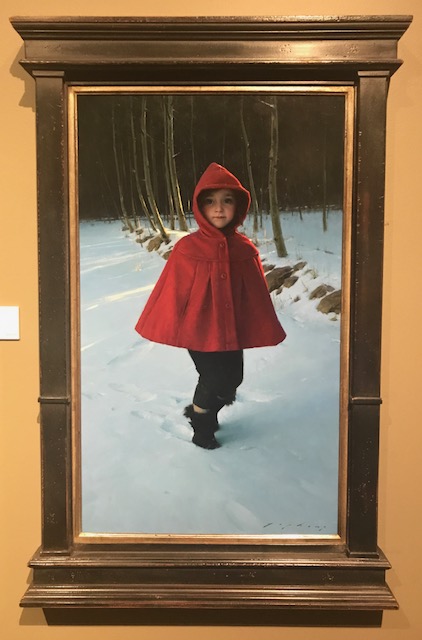
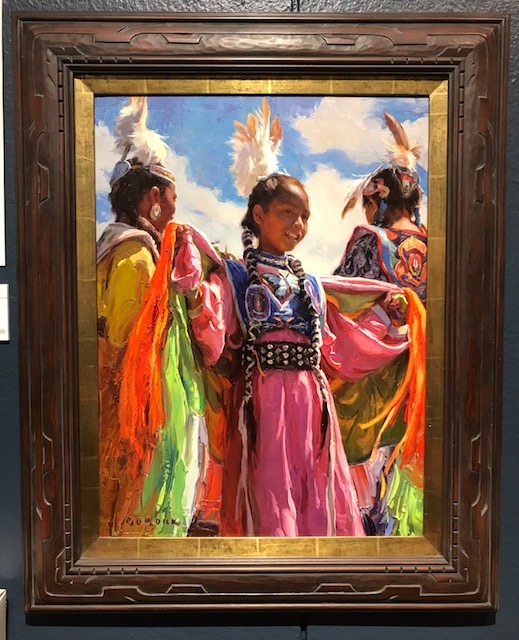
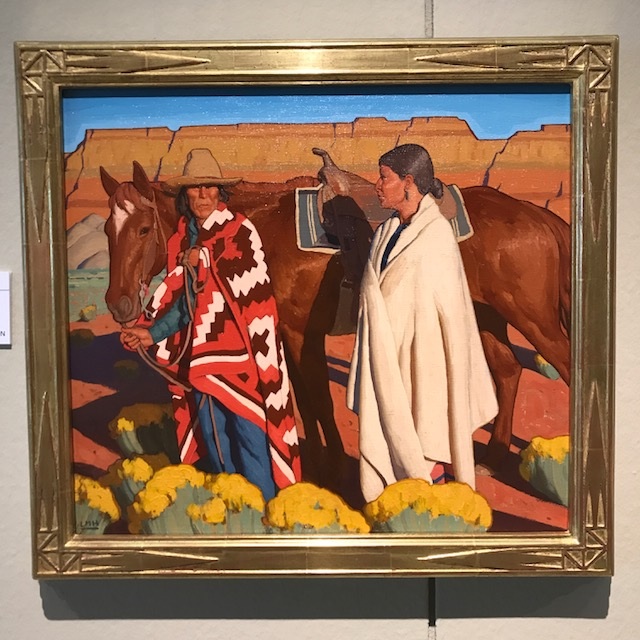
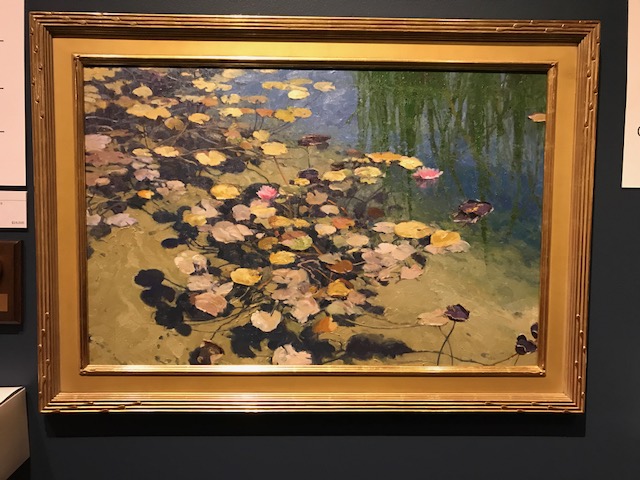
Love and Resilience, Portrait of Louise and Lazar Farkas, Survivors of the Shoah.
46x42”, oil on panel
Congratulations to the 2017 Draper Grand Prize & the People’s Choice Award Winner, David Kassan for his painting Love and Resilience, Portrait of Louise and Lazar Farkas, Survivors of the Shoah. The Portrait Society of America awarded Kassan at the 19th annual International Portrait Competition.
“Thank you so much for the Portrait Society of America…This was definitely a dream for me, and I share these awards with the Survivors, whom have all shared their sometimes painful, but mostly glorious and inspiring lives with me.”-David Kassan
More of David Kassan's inspiring work can be viewed here.
This story was featured in the May 2017 issue of Southwest Art magazine.
This month Maxwell Alexander Gallery presents Into the Night, a solo show for Glenn Dean featuring 10 new paintings that explore the light at the end of the day and into the moonlit hours. The show opens with an artist’s reception on Saturday, May 20, from 6 to 8 p.m. “People get used to the light effects in bright works,” says gallery director Beau Alexander, but the more subtle effects found in these works “make the paintings so much more interesting, not only for the artist but for the viewer as well.” While western artists Frederic Remington and Frank Tenney Johnson were well-known for their nocturnes, Alexander says not many artists have really focused on them since then, and Dean felt inspired to do so.
Although Dean has worked with nighttime and sunset scenes in the past, this show focuses on the times of day when light is most challenging to interpret. “I spent most of last summer going out during the last half hour of daylight and doing little color sketches very quickly, working until I couldn’t see anymore,” Dean says. He also spent a lot of time walking around in the moonlight and just observing.
Dean is known for his simplified landscapes that create an illusion of detail—a style he developed over 15 years of painting outdoors—and these works take those simplified forms even further. “This show is really an exploration of light and color, working within the transition from the fading light of day to the moonlit night,” he says. “I wanted to explore how the changes in light affect how we see our surroundings, and how the surroundings themselves visually merge together and into the night sky, nearly losing all definition, unless defined by the direct light of the moon.” Dean finds working within that tight range of values and colors intriguing but also really challenging. “You want to be truthful to moonlight, but you can’t really see,” he explains, “so you have to make artistic decisions to add more life, more vibration of color working within that low color key. You can very easily push it too far, and it doesn’t feel right, or you don’t go far enough, and it is too dull and boring.”
Most of the works in the show include cowboy figures coming and going in the landscape, figures that offer the idea of a narrative, but one Dean keeps purposely vague. “That story is more in the viewer,” he says. The riders, like his work overall, create the illusion of detail “without banging the viewer over the head with it.”
Alexander notes that nocturnes can be hard for viewers to understand, but “when you see them in person, you realize that nighttime has a special, unique glow, and the subtleties and variations in value appear in a whole new light.” Into the Night remains on view at Maxwell Alexander Gallery’s new location in downtown Los Angeles until June 17. —Laura Rintala
To view more work by Glenn Dean, click here.
In the pre-digital days of Hollywood, film stock was not sensitive enough to render nighttime footage usable to any feasible degree, so directors and their cinematographers often shot “day for night” by underexposing daylight shots and then darkening the shots later in post-production to give the impression of night. The effect generally worked, particularly in Western films, but it gave scenes a surreal and artificial feel with noticeable shadows on the ground and highlights that were a bit too bright to be just moonlight. The camera, at least back then, could not come close to seeing what the human eye could see.
California painter Glenn Dean can relate to the complexity of the human eye. How it can slowly adjust to nighttime conditions. How it can see detail in both shadow and highlight, whether the difference between the two is vast or subtle. How the eye can see color and form, even when lit from the sun’s reflection off the moon, 238,000 miles above the desert floor.
“I would go on these walks at night, and where I live there’s not a lot of light pollution, so you can walk under the light of the stars and still see where you were going,” Dean says. “The
moon especially helps define things at night. It provides just enough information so you can identify shapes and forms, but not completely. I find it interesting how dim that moonlight is, and how it creates this unexpected sense of excitement as you look at things in it. Everything you see is a surprise in it. You almost see everything anew under the moonlight.”
Dean’s new solo show, opening May 20 at Maxwell Alexander Gallery in Los Angeles, will focus exclusively on moonlit, twilight and nocturne images, all of which have been in the repertory of the artists for some time, but he’s never painted this many all at one time.
“Normally, every 10 paintings or so I would do a nocturne, but for this show I thought it would be fun to do a show of nothing but nighttime images,” he says. “I would start a half hour before the sun went down and then just paint into the nighttime until it was too dark to paint anymore. These works were often just color studies of the landscapes as I raced to paint the remaining color in the sky. As it got dark your eyes would start to adjust with the moonlight and then this world would open up.”
Works in the exhibition will include examples from almost every kind of nighttime light, including twilight scenes, where the sun has only barely cleared the horizon but still radiates in the glowing sky, and intensely dark middle-of-the-night light that gives the scenery an eerie bluish cast. In Night Trail, Dean takes the night about as far as it can go, darkening the landscape to an almost abstract level of color and form. He is often inspired by Frank Tenney Johnson, but even Johnson’s nocturnes pulled back before showing the pure overwhelming power of the darkness. Dean, for his part, doesn’t see these new pieces as experiments in color and form, but rather as a continuation of a theme he’s been happy to explore in recent years. “There’s a nuance to the nighttime and I’m just trying to find a way to show that through the paintings,” he says. “I’m asking how to truthfully and honestly explain this moonlight with a variety of compositions and effects.”
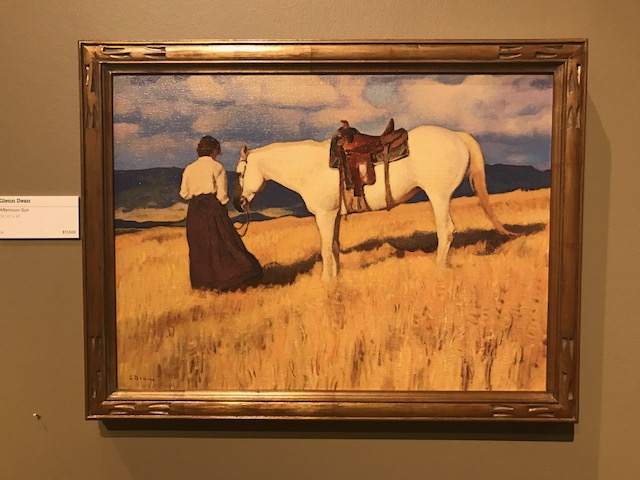
If Night Trail is on the darkest side of Dean’s nocturne spectrum, not far from it are 4 Hours Till Dawn, with a figure standing next to a brilliant white horse, and Into the Night, which shows clouds that seemingly absorb and refract moonlight in glowing airborne pockets. “I’m exploring these darker ones with a limited palette of colors—no more than five and no fewer than three,” Dean says. “They’re pretty tonal, but that’s part of the fun. Some of the paintings have more tonality, but there is color vibration there, especially when you get up close.” On the opposite side of the spectrum are Contemplation, with its rainbow of colors fizzling away as the earth spins away from the sun, and Heading Home, which brings back a male and female figure that have appeared in recent works by the artist.
“Subconsciously, I feel like the female figure started showing up after I got married, which was interesting,” he says. “As far as the story goes, as with any of my works, I try to keep that vague without over explaining everything. It’s more enjoyable for me and my imagination, and the viewer is owed that much too.”
Many of Dean’s male figures are carrying rifles or wearing gun belts, but his works don’t feel dangerous or volatile. They feel quite the opposite—they feel peaceful. “That’s how I try to see the world. I don’t have any experience directly with the Old West, so my experience with the West is peaceful and calm,” he says. “I certainly know the dangerous West existed, and maybe these figures are living in a world where they needed those guns—when they were traveling, for instance—but that’s not me and I don’t want to show that side of the West. I want to show the expansive peaceful qualities of the West.”
To view more of Glenn Dean's work, click here.
This month, Maxwell Alexander Gallery introduces the work of Utah painter Brett Allen Johnson. “We were lucky enough to come across him on social media,” says gallery director Beau Alexander. “While some artists paint a subject just as they see it, there are others who paint works that allow you to see through the artist’s eyes. That’s pretty special, and we picked up on that as soon as we saw Brett’s work.”
Johnson says he started his art training with the intention to go into advertising or design. But, he says, “I started seeing things in the museums of the Southwest, and I wanted to do something different than what the school was focusing on.” Halfway through his course of study, he left school, shifting his focus to the landscape.
Stark, arid, and often ominous, Johnson’s landscapes capture both the vast space and the immediacy of objects within that space. “I don’t know how to spend time in the Southwest and not have that be an indelible part of the experience,” Johnson says. “I’ve always appreciated something that gives a sense of scale. My work is a tribute to the contrast between that space and being in the space.” Important to Johnson is that his work instills at least some general sense of mystery. “I want to be sure that enough is left out that the viewer must complete the idea,” he explains.
For a young artist, the works present a clear imprint of the creator. “People can look at these paintings and know that they are not anyone else’s,” Alexander says. “While paying homage to the painters of the early 1900s, he’s putting his own twist on it.” Although the show, entitled Arid Forms, is small, with just six paintings and two drawings, Alexander stresses that the gallery has its full support behind the artist. “There has been a shift in the market for western American art,” he says, “and the quality and artistic merit is at a whole other level.” Since Johnson epitomizes that shift, Alexander adds, “We’re excited to see where Brett goes from here.”
Utah painter Brett Allen Johnson was going to give himself a year to do some painting and figure out a marketing
plan before he truly embarked on his career as a professional painter. But—as the famous saying goes, “Life is what happens to us while we are making other plans”—the universe had its own plans for Johnson when he was offered a solo show at Maxwell Alexander Gallery in Los Angeles. “I hadn’t planned on that,” the artist says. “It was unexpected.”
He couldn’t have imagined a better gallery asking him. He’d worshiped the work of Logan Maxwell Hagege and Glenn Dean, who both show at the gallery, and now he would be showing work alongside theirs. “Logan and Glenn, the Taos artists, Maynard Dixon...these are the artists that have inspired my work. Dixon especially. There’s no way to remove the indelible mark that he has put on us. We can’t see a cloud or a mesa without seeing something he painted,” Johnson says. “But at the same time, I’m excited to take my influences and pull from them my own views of the Southwest. I’m loving these wide-open spaces, places where I can look for balance with the big external world and the little internal one.”
Johnson is refreshingly optimistic and, at 33 years old, he’s young and excited at what lies before him. When asked about what he wants to say as an artist, he has an answer that is honest and sincere. “As an artist I know the way I want things to look, but I’m not always sure why yet, but that’s OK because that will come with time,” he says.
One thing he is sure about is that he loves painting the landscapes of the Southwest, which he experiments with through color and brushstroke. “If you’re looking at six pieces
then you’re seeing six entirely different approaches to paint handling,” he says. “I enjoy experimenting and seeing where each painting leads me.”
In Sandstone Nocturne, Johnson paints a stylized mountain range lit brightly by the moon. The piece didn’t start as a nocturne, but it did always have abstracted elements in it. “It had a lot of texture, which I liked, but then I also wanted to show the shadow side and the lit side of the mountain, kind of a Caravaggio chiaroscuro thing with the blacked-out shadows that don’t reflect or cast any light,” the artist says, adding that he enjoyed playing with color and tone to fine-tune the painting to what he wanted. “As far as the paint goes, I’ll ask myself what’s the goal. From there I will add more color, or more abstraction, or even less abstraction so the piece can be more realistic and more tangible.”
Other works include the Georgia O’Keeffe-inspired Distant Thunder, which features a mule deer skull that hovers over the landscape, and Gateway and Threshold, which are loosely linked by the artist’s interest in the duality of the Southwest. In Threshold a cattle chute opens up into the open desert; in Gateway a courtyard gate is closed on the magnificent vista behind it. “They’re mysteries because they force you to see, or not see, from a distance,” he says. “It brings me back to the internal and external struggle of the Southwest.”
Johnson’s first solo show, Arid Forms, opens April 1 in Los Angeles.
Logan Maxwell Hagege "The Heart of Everything" 68" x 54"
The Thomas Moran award at this year's Masters of the American West at The Autry was awarded to "The Heart of Everything" by Logan Maxwell Hagege. This award was previously given to Howard Terpning for 11 years straight, this is the first painting to win since. Hagege is the youngest artist to ever win this award. This best in show award is given in recognition of exceptional artistic merit.
Southwest Art

Culver City, CA

Billy Schenck, To Kill a Mocking Bird, oil, 24 x 30.
This story was featured in the December 2016 issue of Southwest Art magazine. Get the Southwest Art December 2016 print issue or digital download now–then subscribe to Southwest Art and never miss another story.
As the landscape of American ranch life continues to change with the tides, Maxwell Alexander Gallery’s group show this month invites viewers to savor slices of its preservation through the eyes of 12 contemporary painters. Each artist shares one or two works inspired by their personal experiences, observations, and expressions of the American ranch and what it stands for. Those artists presenting works include Howard Post, Billy Schenck, Grant Redden, Eric Bowman, Josh Clare, Josh Elliott, Bryan Haynes, and Mark Maggiori. The show opens Saturday, December 10, with an artists’ reception from 6 to 8 p.m.
Gallery director Beau Alexander notes that much of western art is about preserving a changing way of life, a trend that goes back to American artists of the late 19th and early 20th centuries. “This show pays homage to the continued vanishing of the West,” he says. “We’re asking artists to paint their artistic interpretations of ranch life, particularly how it looks today, capturing the moment in history.”
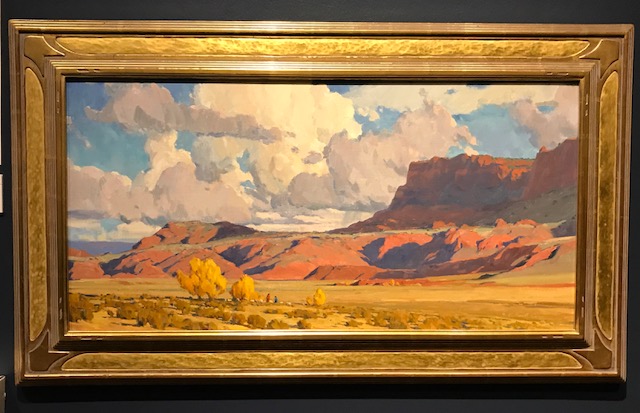
As a third-generation Arizonan who grew up on a small ranch in Tucson, artist Howard Post is intimately familiar with the show’s theme. “I usually portray the quiet times, the downtimes, the little vignettes of ranch life,” muses Post. In one of his two works for the show, CLEAR WATER, horses graze languidly near a stream. One horse stands apart in the shallow water, poised to take a drink. “I like the abstract qualities I find in animals and nature. That’s what gets me going,” says Post. If a narrative results, he adds, that’s a bonus.




Artist Grant Redden, too, experienced ranch life firsthand growing up on his father’s sheep and cattle ranch. “I’ve worn out many a pair of buckskin gloves,” says Redden, “digging post holes, fixing fences, branding, spreading salt on the summer range, mowing hay, feeding stock in a blizzard.” In his painting for the show, WYOMING COWPUNCHER, Redden portrays a rider in the high-desert plateau of southwestern Wyoming, where he lives today. Although subject matter is important to him, Redden is even more motivated, he says, by “the textures, colors, design elements—all those things that make a painting compelling, regardless of the subject.”
Landscape and figure painter Eric Bowman says he’s discovered a new direction this year in western subject matter. Inspired by the “iconic American cowboy,” Bowman created the painting MORNING RIDER for the show, portraying a working cowboy riding on horseback across open land. “His freedom and slower pace of life is something I see being slowly lost to the modern, industrial, and globalized digital age,” says the native Californian, who today lives in northwestern Oregon.
Bowman has witnessed the effects of urban sprawl and global outsourcing on ranches and farms around him. “That way of life is diminishing,” he says. “I think art is and always has been a strong influence on the public consciousness when it comes to drawing attention to important issues. Hopefully, this show will contribute to that consciousness and encourage people to consider this important part of our unique history.” —Kim Agricola
To view this show click HERE.

California-based artist Danny Galieote combines a number of artistic influences to create dynamic narrative scenes that are both nostalgic and what he calls pop contemporary. They show the deft hand of a painter with years of experience under his belt, as well as imagination of an artist who has uniquely defined vision. From November 12 to December 3, new paintings and sketches by Galieote will be on view at Maxwell Alexander Gallery.
“The theme is American myth, basically,” says Galieote of the work for the Culver City, California, exhibition. “I’m taking concepts of nostalgia and making them a pop-contemporary theme using my inspiration from regionalists – Benton, Grant Wood, Curry- and mixing that with the Renaissance influences. I’m painting those styles and working them with American myths and pop cultural stuff from the 1940s and 1950s.”
Galieote says he feels this new body of work is among his best to date because he is expanding upon previous concepts. These pieces display full figures rather than the tightly cropped figures he painted prior, and he also makes his first foray into Western art. “…I’ve always been wanting to do Western pieces,” Galieote explains. “I grew up with horses, actually. We had a small farm when I was a kid, and I grew up feeding horses and chickens, going to horse shows…Western things.”
The show will display at least five Western-themed works, including Trick Shot Lucy, a painting of a woman holding a smoking gun with a desert skyline as her backdrop. The piece- along with much of the artist’s other work-was inspired by the pinup art of artists like Gil Elvgren; illustrators such as Norman Rockwell and J.C. Leyendecker: and regionalist Thomas Hart Benton.
“Benton is one of my art heroes, and I like the work he did going through America and painting the everyday person and making them heroic,” Galieote says. “I have the idea of this heroic figure and just the flair and the dash of this trick-shot girl.”
Galieote also points out his love for 1950s TV programs, such as The Andy Griffith Show and The Lone Ranger, and how Trick Shot Lucy, in particular, captures the flair and fun those shows had. “It’s a female version of that, and I’m making it original and contemporary,” he adds.
Another Western work is American Lioness, which shows a woman in a shirt reminiscent of the stars on the American flag, holding a lasso over her shoulder. “The way I thought of her was this American symbol of strength and on the open range and making the life for herself, paving her own path, “ the artist describes.
Paying homage to two of his influences, Galieote painted Rosie’s Lunch Break. “It’s the same pose Michelangelo did of Isaiah on the Sistine Chapel and Rockwell’s Rosie the Riveter,” he says. The work also draws on stories he heard growing up from his grandfather, who was in the Navy in Pearl Harbor during World War II. “It’s reminiscent of the beach and my whole life inspirations.”
To view more work by Galieote click HERE
A new group show at Maxwell Alexander Gallery in Los Angeles will examine the ranch lifestyle as it pertains to the Southwest. Ranch Life will feature the work of 10 artists, each one offering a different perspective on the popular Western subject matter.
In Bryan Haynes’ Harvey House Cowboy, the painter was guided by early Western illustration. “The painting Harvey House Cowboy was inspired by the early-20th-century promotional posters the legendary Harvey House Hospitality would create along with the Western railroads such as the Atchison, Topeka & Santa Fe Railway (AT&SF) beginning in 1875,” Haynes says. “Many early illustrators and Taos art colony founders participated in the poster series we are very familiar with now. I wanted to create what feels like a very ‘classic’ cowboy from around the turn of the last century, when even carrying a sidearm was common. Ranch life is also very familiar to my wife and me as we have had horses on our property and in our barn for decades, mostly Morgan horses, the only truly American breed of horse.”
Artists of America, will be presenting Wyoming Cowpuncher, “a painting depicting a cowboy riding through the high desert plateau of Wyoming, breathing the fresh air and listening to the clip of hoof on stone, the squeak of saddle leather and feeling the power of his horse beneath him,” Redden says. “It is an exhilaration that motivates the cowboy to live the sometimes solitary lifestyle, long thirsty days in heat, bitter cold, and wind and dust. Ranch life is the struggle of men, women and families to provide a living, battling elements over which they have almost no control: weather, markets, predators, politics. The animals and the landscape and the hardy work ethic of the people who live the ranch life are those things that inspire me to paint. I strive to portray the subject in ways that communicate the struggle. Everything has been painted. The challenge is to bring a fresh viewpoint, push composition and color and surface quality.”
Eric Bowman will be offering Morning Rider, featuring a lone cowboy in a marvelous landscape. “[It was] inspired by several elements; freedom and wide-open spaces for one. I am a
nostalgic person, and I have always liked the older, American dream-version of the cowboy roaming the open plains and desert regions of the West; back when movie studios didn’t have to travel far to shoot epic vistas for the old Western serials of the 1930s and 1940s—as cliché as they may have been,” Bowman says. “The romantic, lonesome aspect of solitary travel and adventure in a time before freeways, urban growth and technology took over...There’s an optimism in scenes like this where there was not yet any competition from the ‘progress’ that loomed on the horizon. I think this kind of open-ended narrative lends an undercurrent that resonates with a lot of people too—escapism perhaps, but it’s honest in its simple appeal to our sense of freedom and the big outdoors.”
Other artists with works in the show include Joshua Clare, Howard Post, Billy Schenck and others. For updates on the show, visit www.maxwellalexandergallery.com.
by Southwest Art, September 15, 2016
Culver City, CA
Maxwell Alexander Gallery, October 8-November 5

Brett Allen Johnson, "Southern Rhythm", oil, 19 x 24.
This story was featured in the October 2016 issue of Southwest Art magazine.
As often as it has been painted over the past few centuries, the grandeur of the Grand Canyon never ceases to inspire artists. The sheer vastness of the canyon—277 miles long, a mile deep, and up to 18 miles wide in some areas—presents infinite vantage points for creating interpretations on canvas. This month at Maxwell Alexander Gallery, 12 western painters share their own contemporary takes on the Grand Canyon in a group show dedicated to the national park. The show opens on Saturday, October 8, with an artists’ reception at 6 p.m.
“The Grand Canyon is one of my personal favorites,” says gallery director Beau Alexander. “Probably every western artist in our genre has painted it, and I’m excited to see what the modern masters do with it.” Participating in the show are artists Glenn Dean, Logan Maxwell Hagege, G. Russell Case, David Grossmann, Mark Maggiori, Tim Solliday, Ray Roberts, Matt Smith, Josh Elliott, Teal Blake, Bryan Haynes, and Brett Allen Johnson. The artists began preparing their works as early as eight months before the show, and each artist exhibits one or more paintings. “The Grand Canyon is such a vast and complicated landscape and it’s going to be interesting to see how the artists simplify that,” says Alexander.

Brett Allen Johnson "Southern Rhythm" oil, 19 x 24.

Bryan Haynes, "Havasupai–Grand Canyon" oil, 36 x 54.

G. Russell Case, "One Piece of the Pie" oil, 24 x 18.

Mark Maggiori, "Secret Talk at Sunset" oil, 30 x 24.

Ray Roberts, "View Towards Horus Temple, Grand Canyon National Park" oil, 18 x 24.
David Grossmann, "Canyon Heights" oil, 34 x 20.
This was Bryan Haynes’ first time painting the canyon, but he has visited the area more than once and has hiked within the park. “I like to tell stories with my paintings and to give a sense of regionalism by placing figures in a landscape,” he says. The artist, who lives in Labadie, MO, brings a piece called HAVASUPAI, GRAND CANYON to the show. In this painting, Haynes says he wanted to suggest the history of the Havasupai Indians who have lived there for centuries, and he selected shapes and colors that reflect the region. “At the same time, I hope to achieve an illusion of the vast depth of the Grand Canyon, while simultaneously referencing the flatness and beautiful design of a Navajo weaving,” adds Haynes.
Brett Allen Johnson, of Lehi, UT, says his works are often a response to the arid parts of the Southwest—the deserts, badlands, and canyons. “I’m not usually a painter of literal places, and I avoid well-known landmarks,” says Johnson. “I don’t capture places. I make paintings, first and foremost, and I knew that if I were to create a successful painting here, I would have to maintain that motto.” His resulting work, SOUTHERN RHYTHM, portrays the canyon’s rugged geologic strata in fiery vermilion tones. “I feel it’s very important for a painting to come from an authentic place,” says Johnson. “Very simply, these are my places, and this is what they look like.”
No two paintings in the show will be the same, says Alexander. “When an artist has the vastness of a landscape, it gives them an avenue to explore it and give it their own voice,” he says. As for iconic locations like the Grand Canyon, he adds: “We know how we see it, but how does an artist view it?” —Kim Agricola
To view this show or others, click HERE.
Vistas of the canyon
Nothing defines the freedom and open spaces of the West more than the Grand Canyon. It’s the icon of icons, the natural force that has inspired Western artists beginning famously with Thomas Moran. Maxwell Alexander Gallery in Los Angeles has put together a show of contemporary interpretations of the canyon from leading Western artists such as Mark Maggiori, Bryan Haynes, Brett Allen Johnson, David Grossmann, Ray Roberts, and G. Russell Case.
Grossmann is known for his ethereal and abstracted landscape paintings. In his Grand Canyon piece, titled Canyon Heights, he is able to show the vastness of the canyon as well as its signature vistas just through implied detail.
“Standing on the canyon rim gives me the feeling that I am flying and falling at the same time,” says Grossmann. “When I look far across to the other side, first I notice the flat stillness of the horizon line. Then, as I look father and father down the layers of earth, I watch as the
lines leave their stillness and become more and more curving, gracefully turbulent, until at last I finally glimpse the twisting green river far below.”
Maggiori’s piece Secret Talk at Sunset shows two riders on horseback sharing a moment while the canyon spreads out behind them. It’s a beautiful piece and contrasts the intimacy of the two riders with the overwhelming greatness of the landscape.
“There is no place like that on earth,” says Maggiori. “The Grand Canyon is mystical, mighty and majestic. Observing the light changing from sunrise to sunset is such an enlightening experience. It makes you forget about everything else and imagine that you are all alone and in total bliss.”
Another interesting piece is Haynes’ Havasupai-Grand Canyon. In it a lone Native American figure runs across the foreground, his body lightly imprinted with traditional designs mixed across parts of the canyon.
“It depicts that vast depth of the Grand Canyon while simultaneously suggesting the flatness and beautiful design of a Navajo weaving,” says Haynes. “The painting pays homage to the history of the Native Americans, the Havasupai who have lived in the Canyon for more than one thousand years, with a
figure integral to the landscape: he looks out at us—directly at the viewer. So, I wonder what emotions might be elicited from people who view the painting.”
Maxwell Alexander Gallery artist Teal Blake is featured on the cover of October's issue of Western Art Collector Magazine. Pick up a copy today, and see more of Teal Blake's artwork HERE

Eiteljorg Museum's Quest for the West Art Show and Sale featured several Maxwell Alexander Gallery artists. Artist Glenn Dean was awarded with the prestigious Victor Higgins Work of Distinction Award for best body of work, and Josh Elliot with the Harrison Eiteljorg Purchase Award.

Harrison Eiteljorg Purchase Award
Josh Elliot, "Calving Season," 2016
Oil, 24" x 58" .

Work by Glenn Dean at the Eiteljorg Museum in Indianapolis, Indiana