• Exhibitions
  • SHOP
  • NEW ARRIVALS
  • Artists
  • Contact
  • News
  • SELL - YOUR - ART
Menu

Maxwell Alexander Gallery

  • Exhibitions
  • SHOP
  • NEW ARRIVALS
  • Artists
  • Contact
  • News
  • SELL - YOUR - ART
View fullsize IMG_2254 2 copy.jpg
View fullsize s.jpg

Award Winngers: Kim Wiggins, G. Russell Case, Grant Redden

June 23, 2026

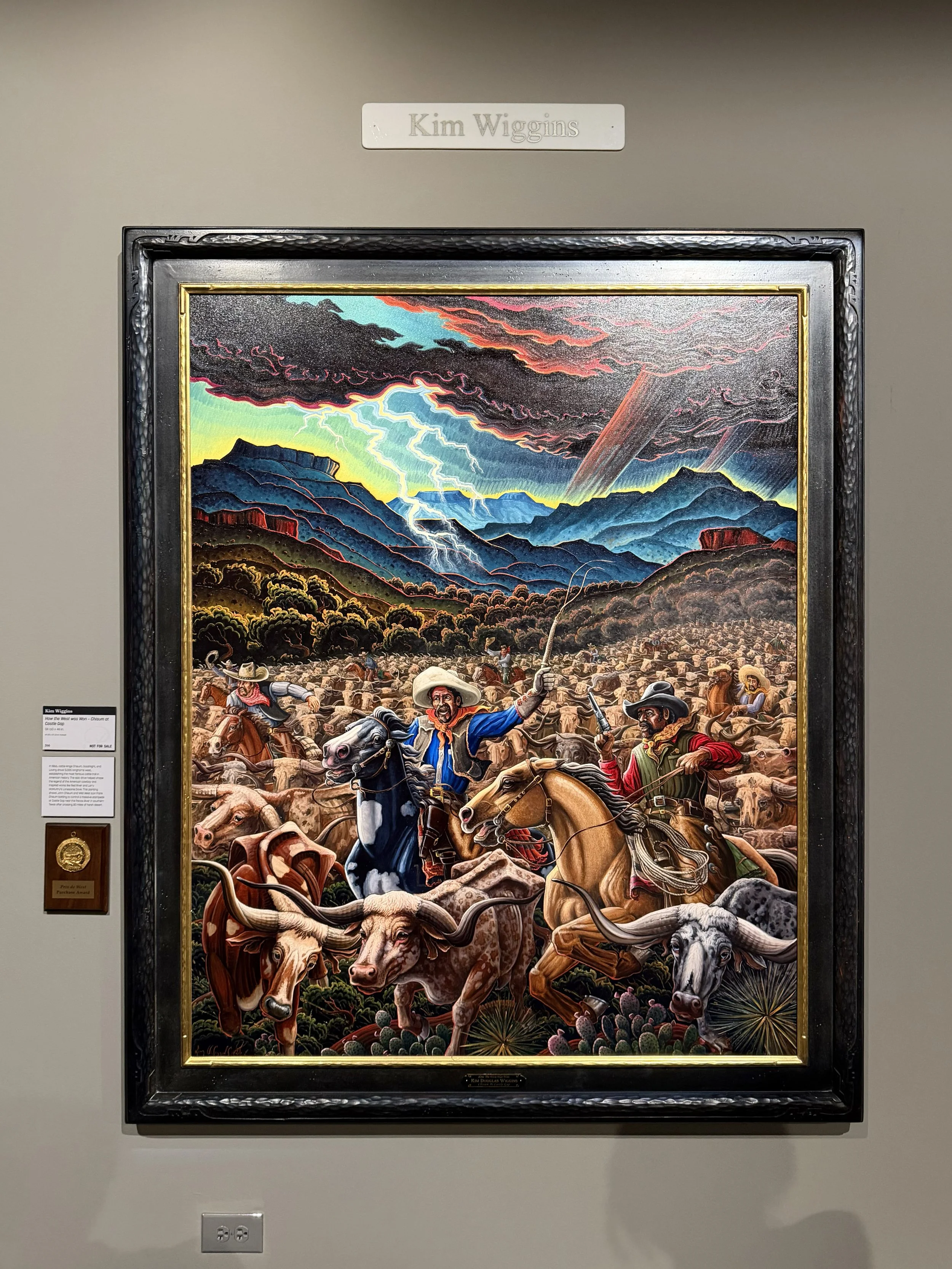
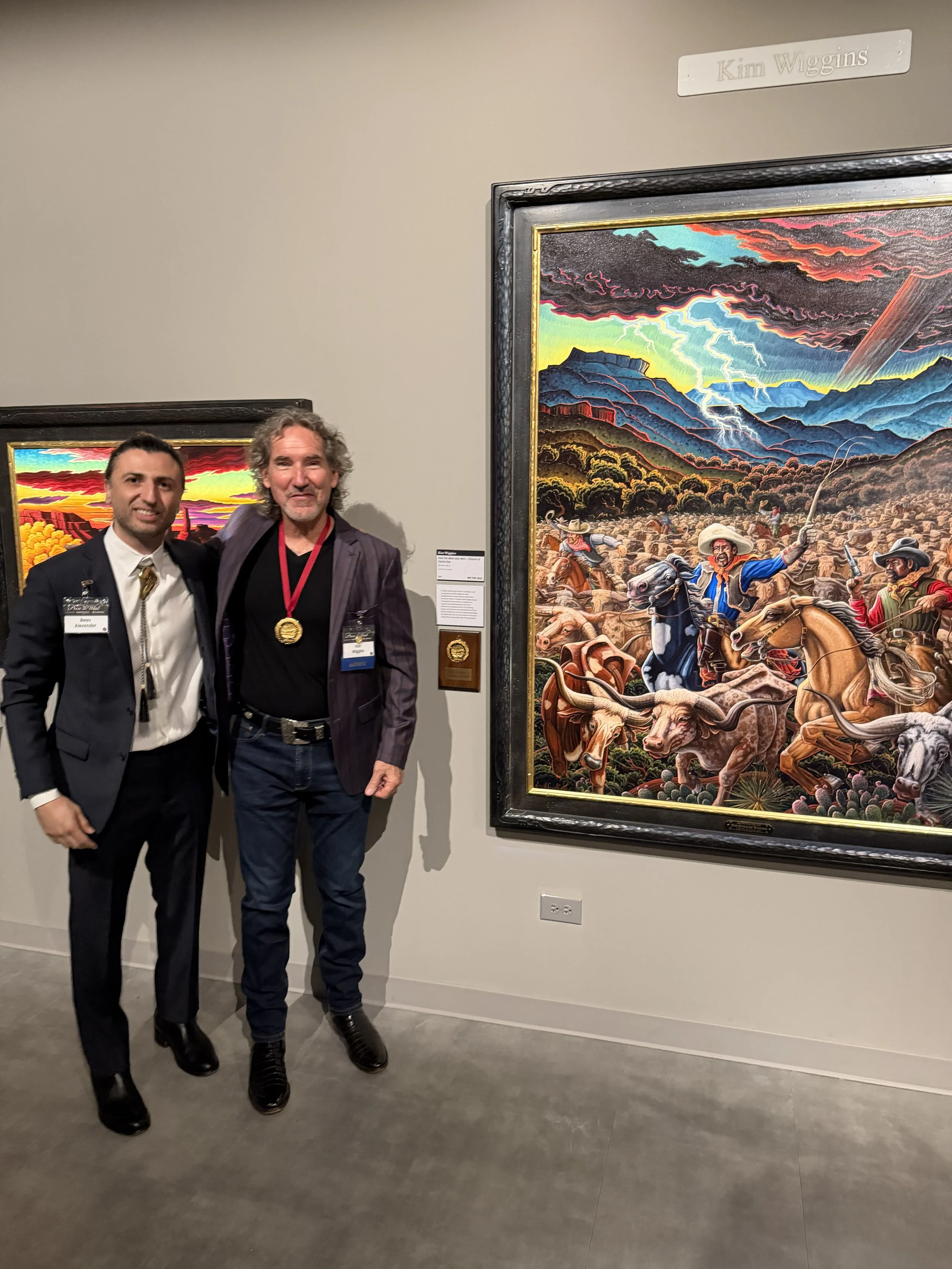
A huge congratulations to Kim Wiggins on being awarded the 2026 Prix De West Purchase Award. Considered by many to be the most prestigious museum recognition in the American West, this honor is incredibly well deserved.

What makes this award especially meaningful is that museums are increasingly looking beyond traditional Western realism and recognizing artists working within a broader modernist tradition, what we categorize as “Western Regionalism.”

Wiggins has been painting in his unique style longer than almost any artist working in the West today. His influences range from Frederick Remington and Herbert Dunton to Alexandre Hogue, Mexican Folk Art, and beyond. The result is work that feels completely his own.

Western art has deep roots in the modernist movement of the early 1900s, but much of the genre shifted toward traditional realism beginning in the 1970s. It is encouraging to see institutions once again embracing artists with personal and original visions of the West.

This feels like a win for all of us. Congratulations, Kim!

Kim Wiggins
How the West Was Won – Chisum at Castle Gap
Oil, 60 x 48 in.
2026

“In 1866, cattle kings Chisum, Goodnight, and Loving drove 3,000 longhorns west, establishing the most famous cattle trail in American history. The epic drive helped shape the legend of the American cowboy and inspired works like Red River and Larry McMurtry’s Lonesome Dove. This painting shows John Chisum and Wild West icon Frank Chisum battling to control a massive stampede at Castle Gap near the Pecos River in southern Texas after crossing 80 miles of harsh desert.”

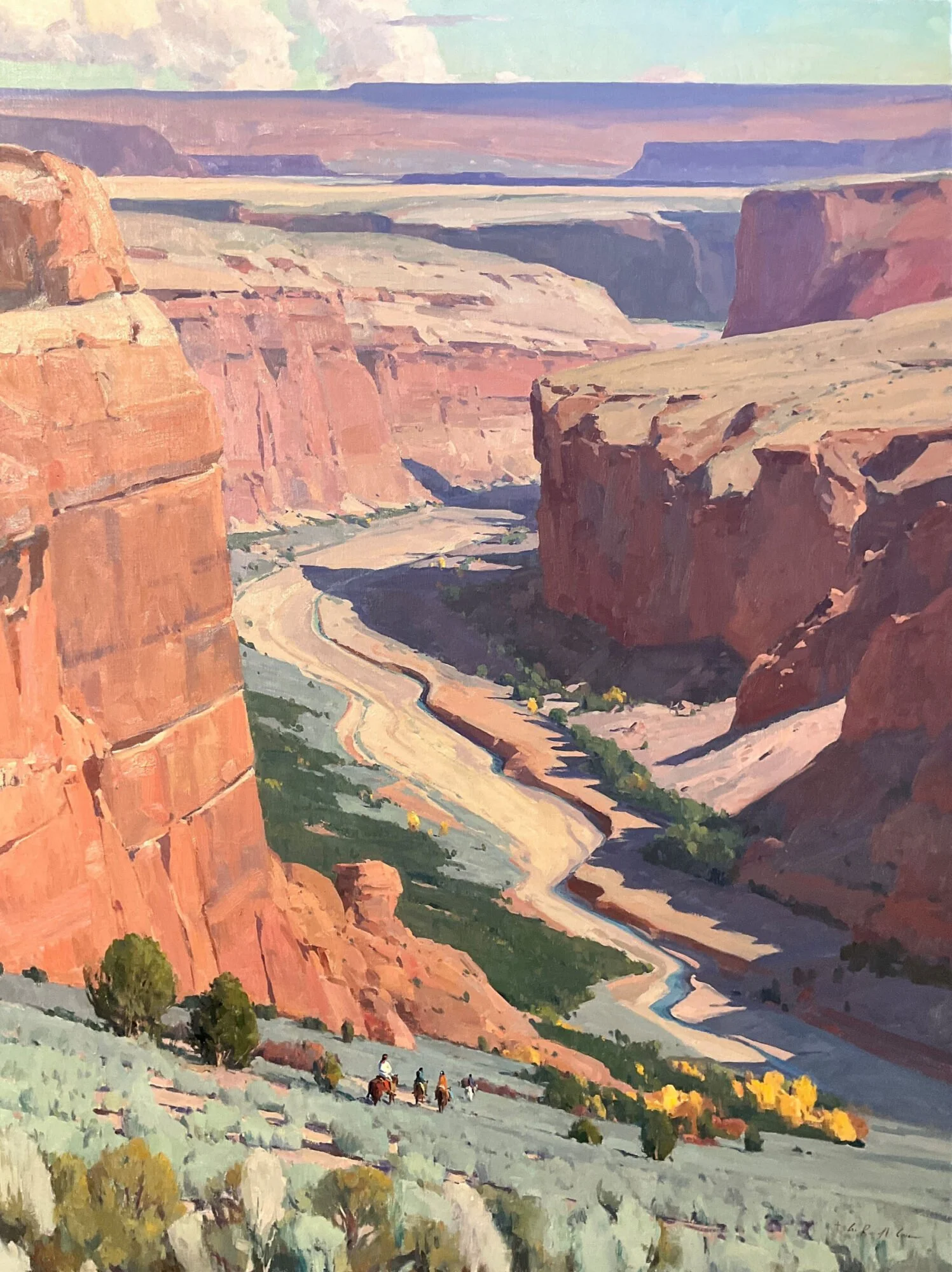
Maxwell Alexander Gallery artists G. Russell Case & Grant Redden were both also award winners at the 2026 Prix de West. 
Case was awarded the Wilson Hurley Memorial Award for Outstanding Landscape for Into Red Canyon Oil on linen on board, 48 x 36 in.
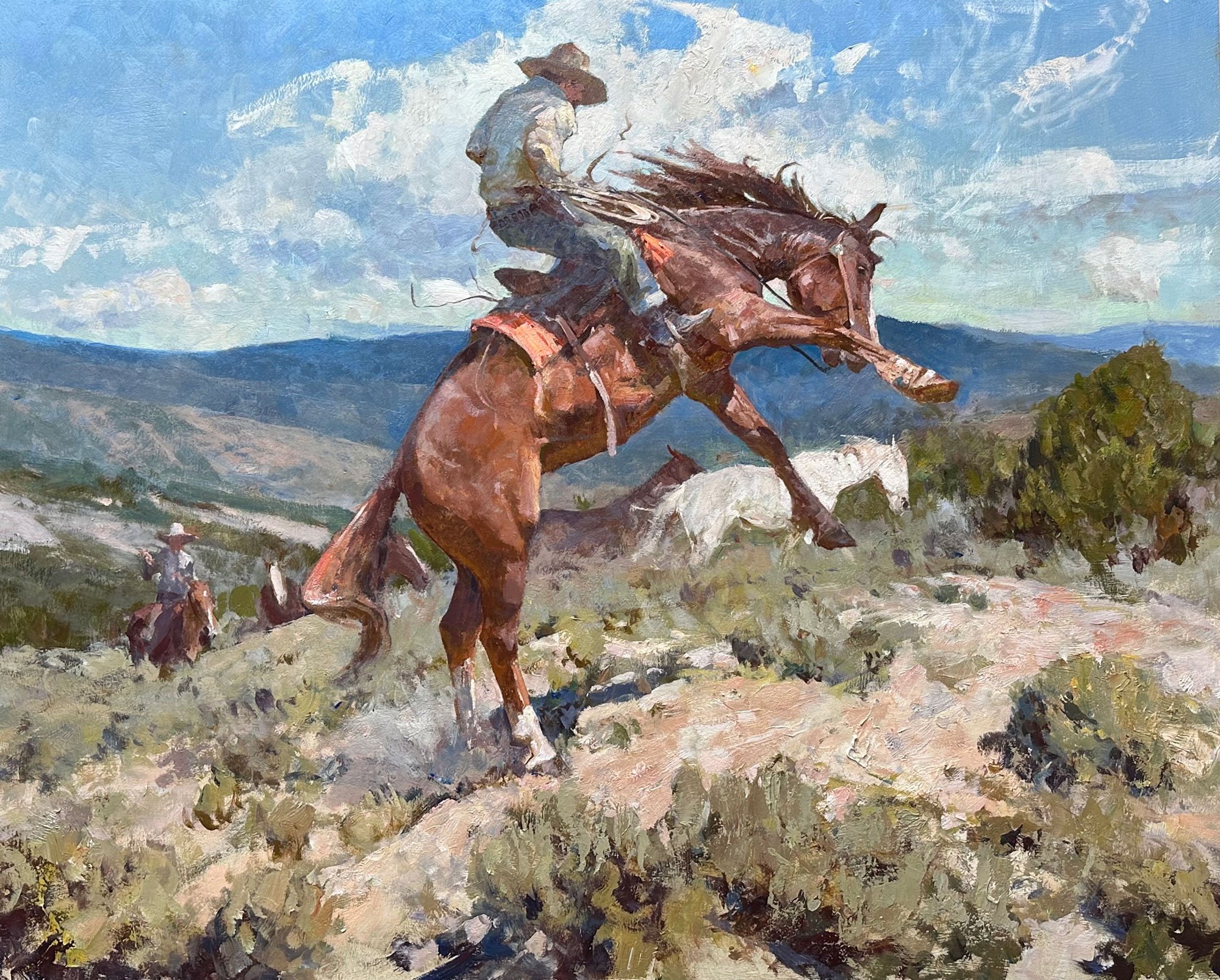
Redden was awarded the Great American Cowboy Award Anxiously Engaged  Oil, 24 x 30 in.
View fullsize IMG_2473.JPG
View fullsize IMG_2472.JPG
Tags Kim Wiggins, Prix de West, Prix de West 2026, National Cowboy & Western Heritage Museum, Western Art, Western Regionalism, Contemporary Western Art, Modern Western Art, American West, Western Painting, Cowboy Art, Western Artist, Maxwell Alexander Gallery, Frederick Remington, Herbert Dunton, Alexandre Hogue, Mexican Folk Art, Chisum, Castle Gap, Texas History, Cattle Drive, Longhorns, John Chisum, Lonesome Dove, Red River, Western Landscape Painting, Museum Award, Fine Art, Oil Painting, G. Russell Case, Grant Redden, Wilson Hurley Memorial Award, Great American Cowboy Award, Into Red Canyon, Anxiously Engaged, Contemporary Art, American Art, Western Collectors, Western Art Museum, Prix de West Winners, Western Art Awards, Cowboy Culture, Art of the American West
Outwest-pub1-WEB.jpg Out-West-pub2-WEB.jpg

WESTERN ART COLLECTOR MAGAZINE TAKES A LOOK AT THE FORTHCOMING "OUT WEST" EXHIBITION

March 1, 2019

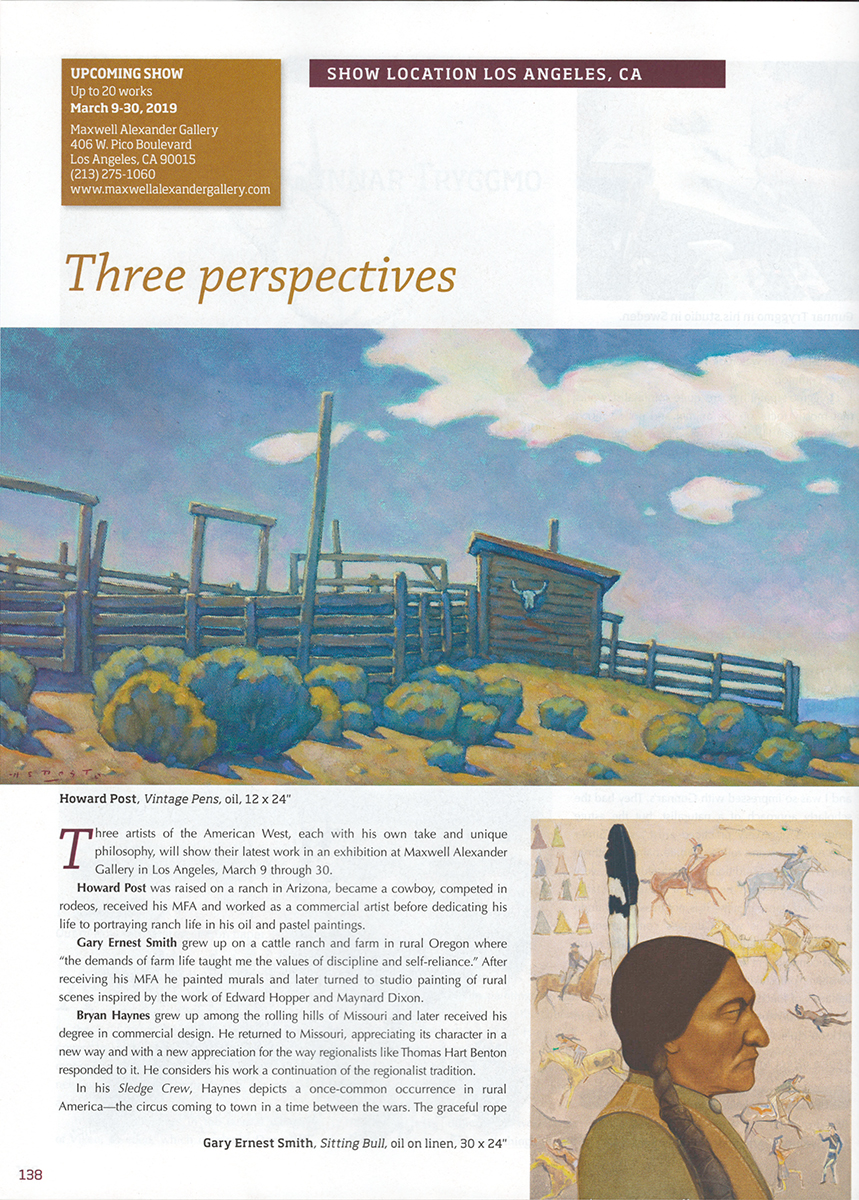
Three Perspectives

Three artists of the American West, each with his own take and unique philosophy, will show their latest work in an exhibition at Maxwell Alexander Gallery in Los Angeles, March 9 through 30.

Howard Post was raised on a ranch in Arizona, became a cowboy, competed in rodeos, received his MFA and worked as a commercial artist before dedicating his life to portraying ranch life in his oil and pastel paintings.

Gary Ernest Smith grew up on a cattle ranch and farm in rural Oregon where “the demands of farm life taught me the values of discipline and self-reliance.” After receiving his MFA he painted murals and later turned to studio painting of rural scenes inspired by the work of Edward Hopper and Maynard Dixon.

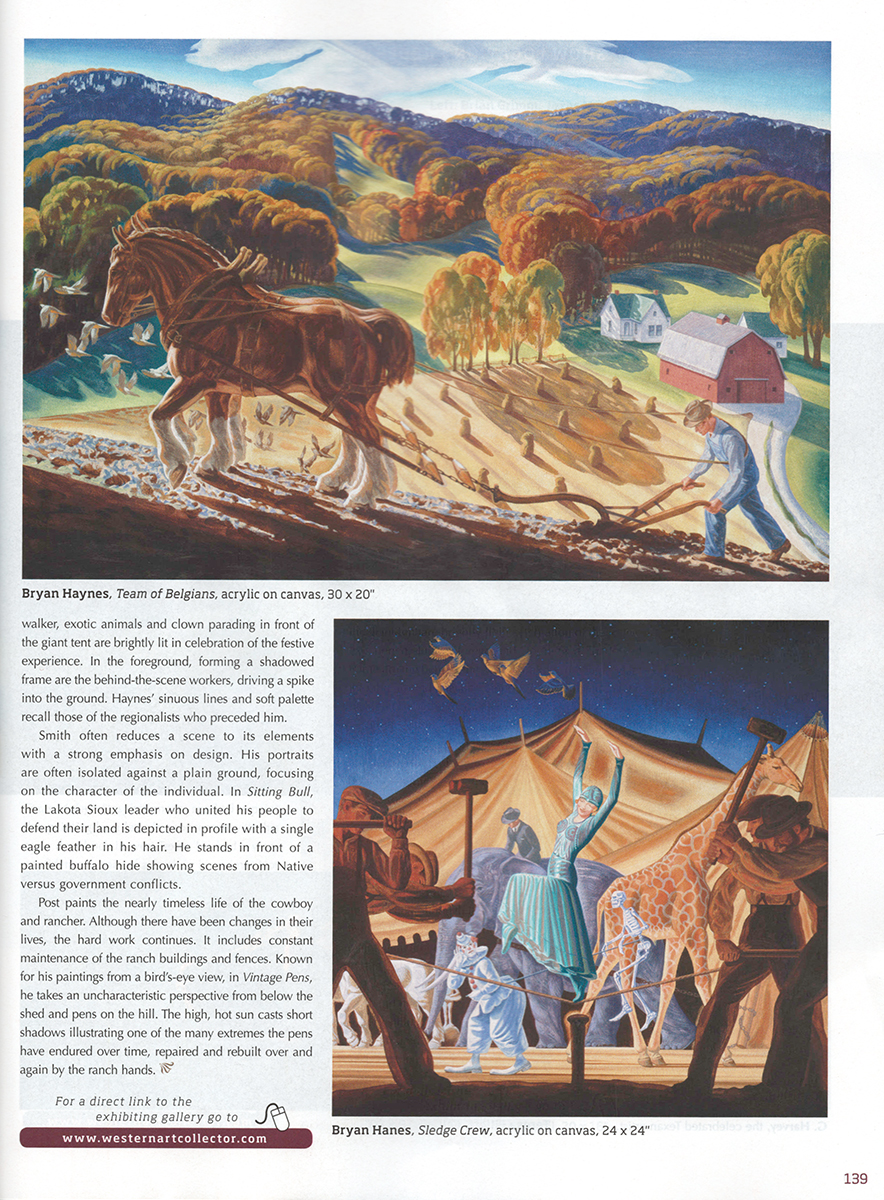
Bryan Haynes grew up among the rolling hills of Missouri and later received his degree in commercial design. He returned to Missouri, appreciating its character in a new way and with a new appreciation for the way regionalists like Thomas hart Benton responded to it. He considers his work a continuation of the regionalist tradition.

In his Sledge Crew, Haynes depicts a once-common occurrence in rural America— the circus coming to town in a time between the wars. The graceful rope walker, exotic animals and clown parading in front of the giant tent are brightly lit in celebration of the festive experience. In the foreground, forming a shadowed frame are the behind-the-scenes workers, driving a spoke into the ground. Haynes’ sinuous line and soft palette recall those of the regionalists who preceded him.

Smith often reduces a scene to its elements with a strong emphasis on design. His portraits are often isolated against a plain ground, focusing on the character of the individual. In Sitting Bull, the Lakota Sioux leader who united his people to defend their land is depicted in profile with a single eagle feather in his hair. He stands in front of a painted buffalo hide showing scenes from Native versus government conflicts.

Post paints the nearly timeless life of the cowboy and rancher. Although there have been changes in their lives, the hard work continues. It includes constant maintenance of the ranch buildings and fences. Known for his paintings from a bird’s-eye view, in Vintage Pens, he takes an uncharacteristic perspective from below the shed and pens on the hill. The high, hot sun casts short shadows illustrating one of the many extremes the pens have endured over time, repaired and rebuilt over and again by the ranch hands.

Tags Western Art Collector Magazine, American West, Howard Post, Bryan Haynes, Gary Ernest-Smith, Western Art

All Content © Maxwell Alexander Gallery 2023