America is defined by its people, and often by their experiences. Not just one person, or a group, but all of them added together. That is the story of the country.
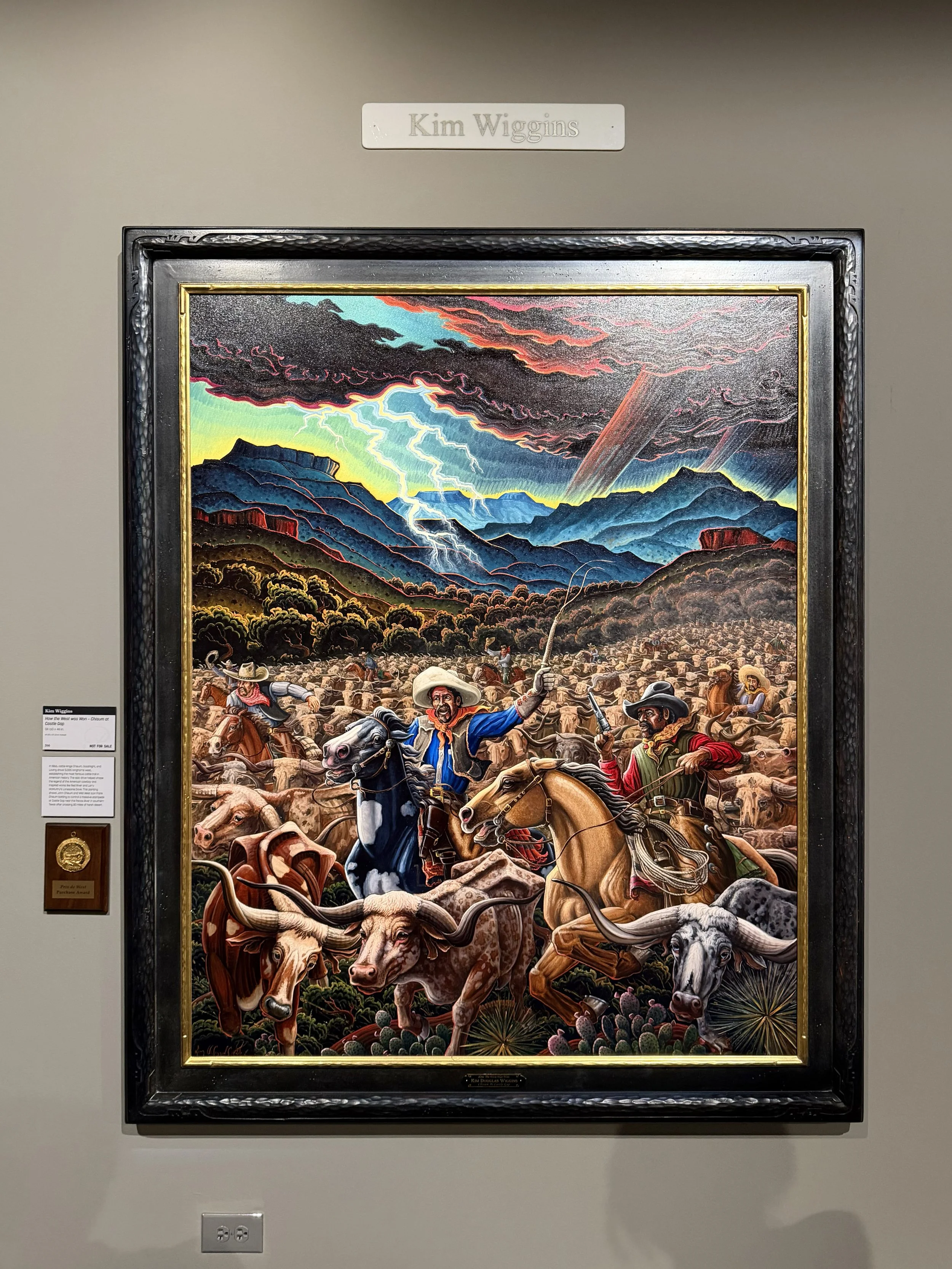
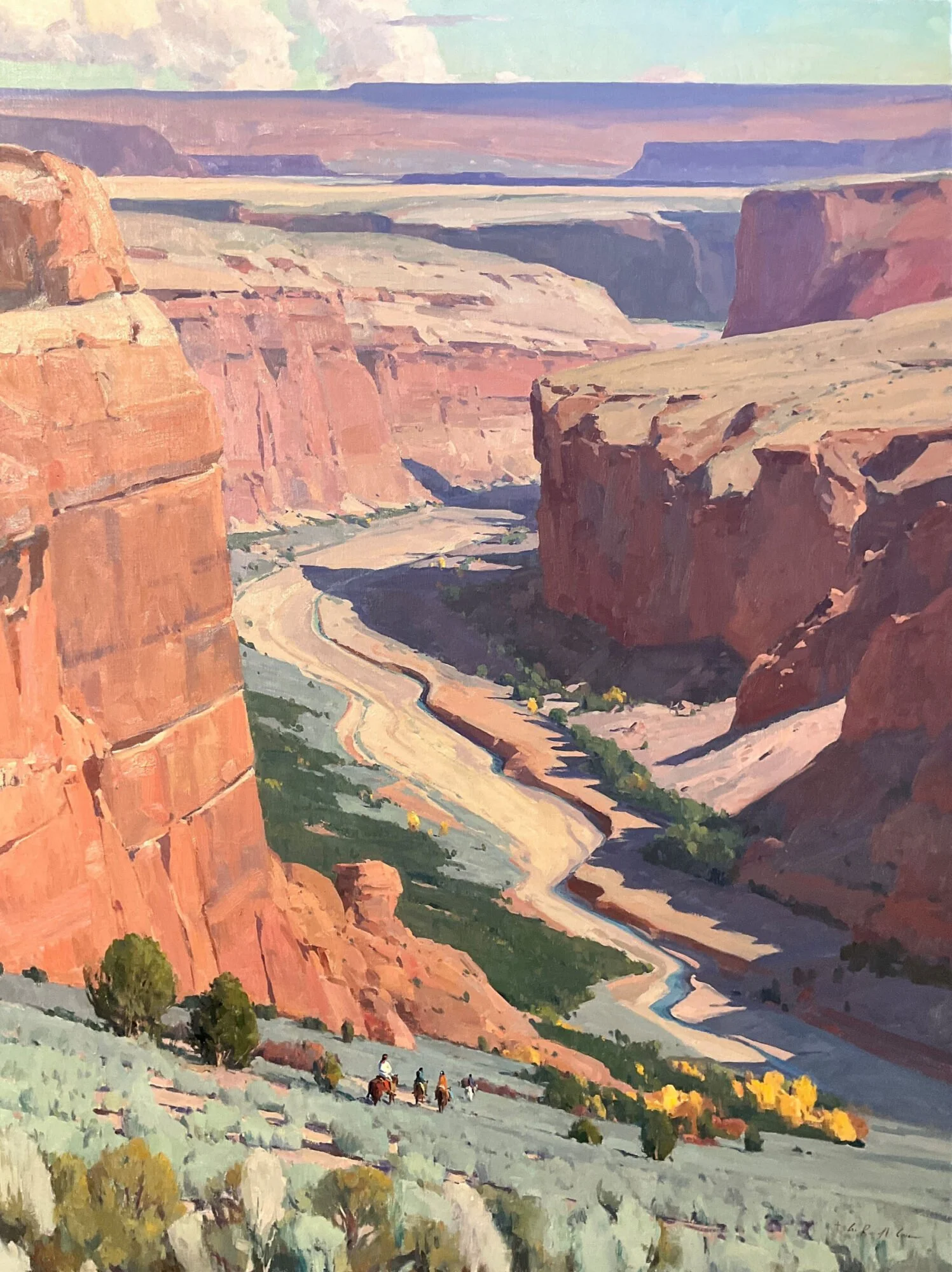
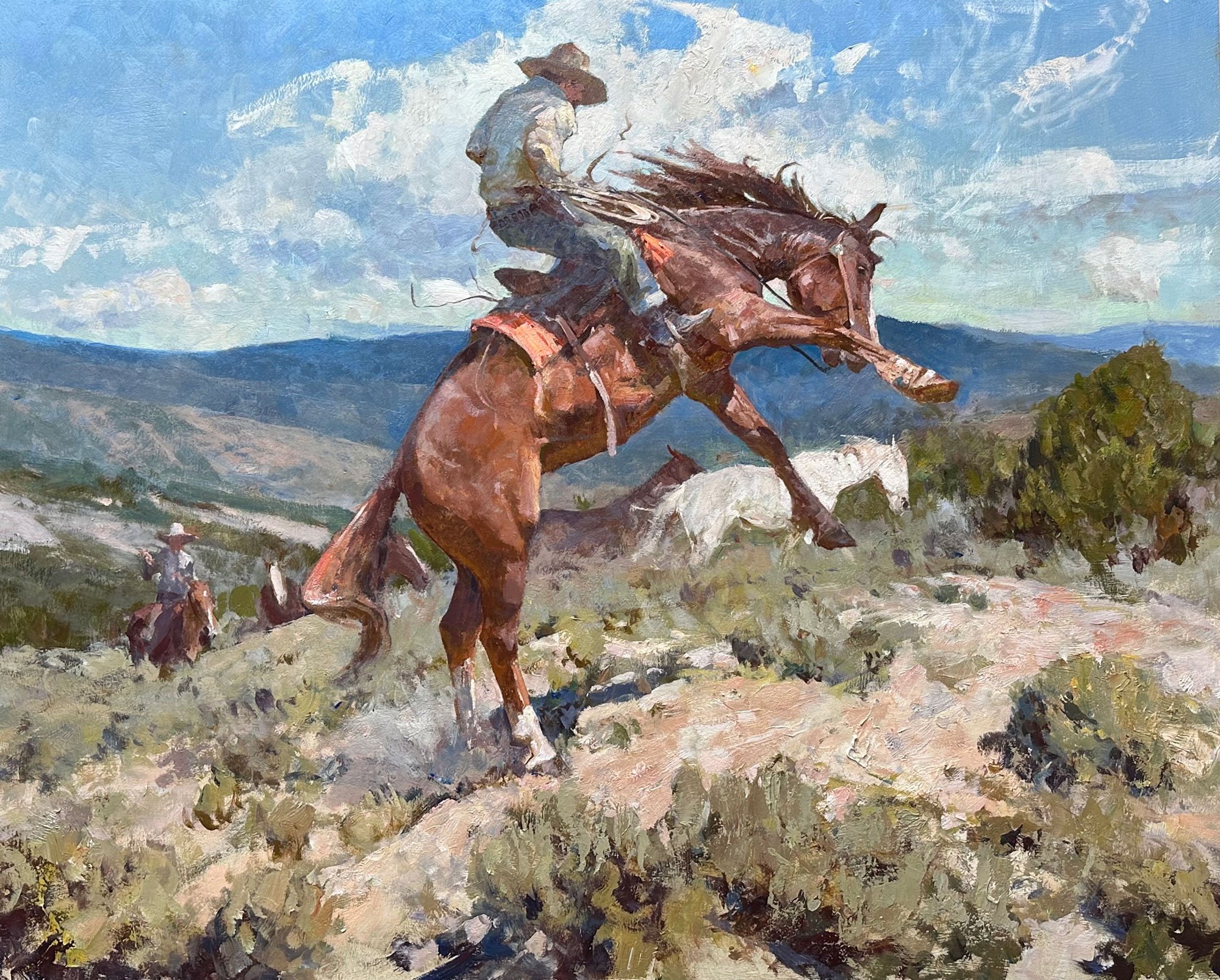
Painter Kim Wiggins has contributed to that living tapestry through his artwork, which often tells stories of the Southwest—of Santa Fe, of Texas and the Alamo, of cattle trails and horse ranches. But something happened in 2020 that made him question if he was telling the full story. It would shake him to his core.
“It all started with my son Elisha. It was during the George Floyd event and the aftermath of that. My son asked me, ‘Dad, what have you ever done to help heal Black society in America?’” Wiggins says, adding that his son was in his early 20s at the time and was asking the question because he and his friends were deeply moved by the national response to police violence against Black people. “He asked the question and then it stuck in my heart.
I felt like I had to respond to that question.” Wiggins had depicted Black subjects in paintings before—including a major piece on cowboy Frank Chisum, who was born into slavery—but the inquiry from his son gnawed at him. He would get his chance to answer that question a year later when the NAACP, the nation’s oldest civil rights organization, came calling.
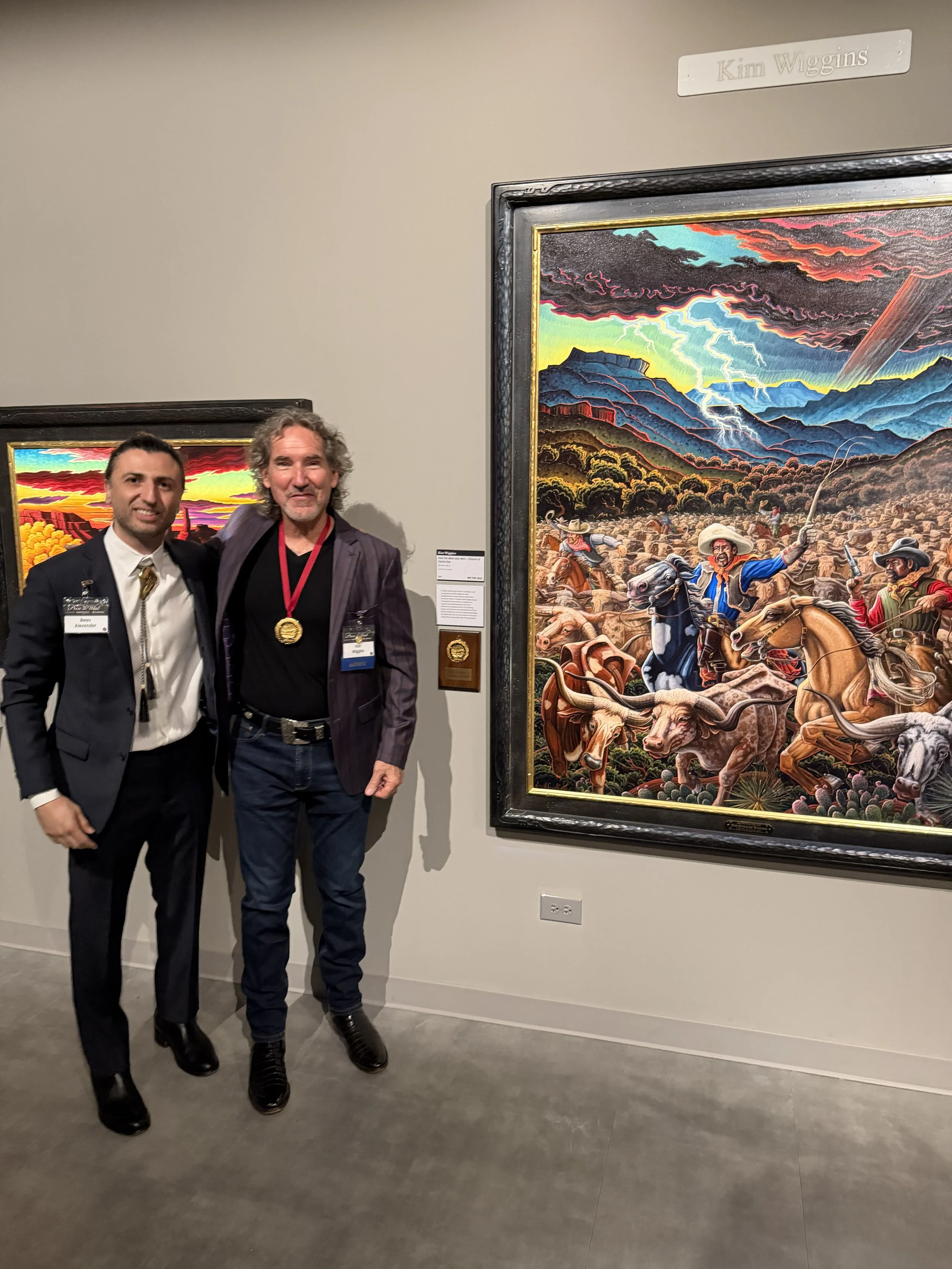
On the other end of the call was Elijah Rashaed, NAACP art curator, who was a new fan of Wiggins’ work. He first made contact with Beau Alexander, owner of Maxwell Alexander Gallery in Los Angeles, who immediately began hyping his artist to Rashaed and encouraging the organization to hire Wiggins for what was then supposed to be one or two paintings. By the beginning of 2023, Wiggins would complete four works as part of the commission, all of which were unveiled during a Juneteenth celebration at Ohio’s Dayton Fine Art Institute.
“The historic organization...approached us with a project to depict historical scenes of Black America. The NAACP sought out Wiggins’ unique vision and painting style to stand out amongst so many great artists that have come before,” Alexander says. “Previous notable artists that have been commissioned in years passed include Frank Morrison, Ernie Burns, Kadir Nelson, Kehinde Wiley and Amy Sherald. Wiggins will be painting four large-scale works, each with a different time period expressed through vivid colors and imaginative visions that are synonymous with the artist’s artworks. Once completed...the four paintings will tour the country and eventually become part of the organization’s permanent collection.”
One issue that would come up frequently for Rashaed was how Wiggins, who is not Black, could be asked to contribute to an organization that speaks to and for Black Americans. For him, the answer was simple.
“It’s an important question and one I like to put a lot of emphasis on so it won’t be undermined: Art is art no matter who the artist is,” Rashaed says. He cites Norman Rockwell, the creator of The Problem We All Live With, a painting showing 6-year-old Ruby Bridges being escorted into a recently desegregated school in 1960. “Artists should not be told to stay away from subjects or stories because they are not of a certain ethnic group. I’m glad we have a work like Rockwell because it tells an important story. And it’s a great work of art. And that’s why Kim and his work are important as well.”
One of the things that Rashaed is especially excited about with Wiggins’ four paintings is that they touch on the darker side of history, like Rockwell’s painting, but they also are more hopeful and positive as well. “That was done on purpose. We don’t want to just look at things that are dark, but contrast them with things that are light,” he adds. “These issues are meant to bring hope as much as awareness.”
Wiggins points to his piece The Price of Cotton, which shows slaves working in a cotton field as a white rider with a whip is positioned in a central location in the painting. The landscape and color are beautiful, but they shine on America’s most shameful history. Contrasting that is Homecoming Reunion, an image of a family celebration on a farm. “Elijah contributed a lot to the project and he has so much wisdom as to what he wanted to convey. For this one, he wanted to show that not all white people are rich, and not all Black people are poor. He wanted something that celebrates the strength and achievement of our history,” Wiggins says. “And even as he was giving me ideas, he was telling me to paint like I want. So these are very much Kim Wiggins’ paintings. He told me, ‘I don’t want to hold your brushes for you,’ and he didn’t. He allowed me the freedom of creativity.”
In another image, The Finger of God, Wiggins shows a family clinging to the roof of a barn as a massive tornado bears down on them. “Here in this dramatic painting, an isolated family clings to each other as the violent tempest bears down on them,” the artist says. “Storm surge waters swell and lap at the rooftop as desperate creatures join them in an iconic quest, clinging to each other as the only lifeline. Mankind’s determination for survival and deep love of family are all represented in these heroic, Rodin-inspired figures. Two great events from America’s past inspired this dramatic work of art: the Great Mississippi Flood of 1927 and the Chenière Caminada Hurricane of 1893.” Both natural disasters disproportionately affected Black Americans in the South, and they received little recourse from the government. And yet, for the artist, there is a resiliency in the faces of his subjects. They would not be defeated.
The painting In the Midst of God intertwines music and religion. The result is a beautiful scene of worship under Wiggins’ undulating nighttime skies that shimmer as if space were an endless pond rippling with raindrops. “A shooting star streaks across a star-studded sky filling lives with promise and hope. The heavy evening air is filled with music as a preacher prays over a child in this nighttime revival meeting. Eyes are lifted toward heaven as people build their faith by praying, singing and dancing,” the artist says. “Music and faith have played a major role in influencing the lives of multitudes of Black Americans over the years.”
When asked if these paintings accurately represent Black Americans, Rashaed was quick to point out an important distinction: “No, these works represent all Americans. These are
stories for all of us, from all of our history,” he says. “I think that’s why what Kim is doing is so important. He speaks for all of us in these pieces. And he compels all of us to look and learn.”
For Wiggins, who credits Alexander and Rashaed for making the commission happen, the paintings represent his own desire to speak to issues that relate to our larger society. “That is the calling of the artist. The artists are the souls of the society, and they are here to awaken and influence the world around them,” he says. “Whatever I’m painting, my desire is to influence society for the better and to enrich lives. I want my work to transport people to another time and place, and for them to experience things that are beyond them.”